

10 Simple Skills You Can Teach Your Child at Home
Football Made Simple for Every Family
The garden, a ball, and no idea where to start
You've said you'll go out and “have a kick about,” and now you're standing on the grass with a ball at your feet and your child looking at you like you're about to teach them something. You're not entirely sure what. This happens to almost every parent at some point, and it's worth saying plainly: you don't need to know anything about football to make this time genuinely useful.
The way England Football itself talks about coaching young children is reassuring, if you've never heard it before — at this age it's mostly just about spending time with a ball at their feet until it stops feeling awkward. Not tactics, not shape, just touches. So that's what this list is: ten small things you can do for ten minutes at a time, in a garden, a hallway, or a patch of park, without needing to sound like you know what you're talking about.
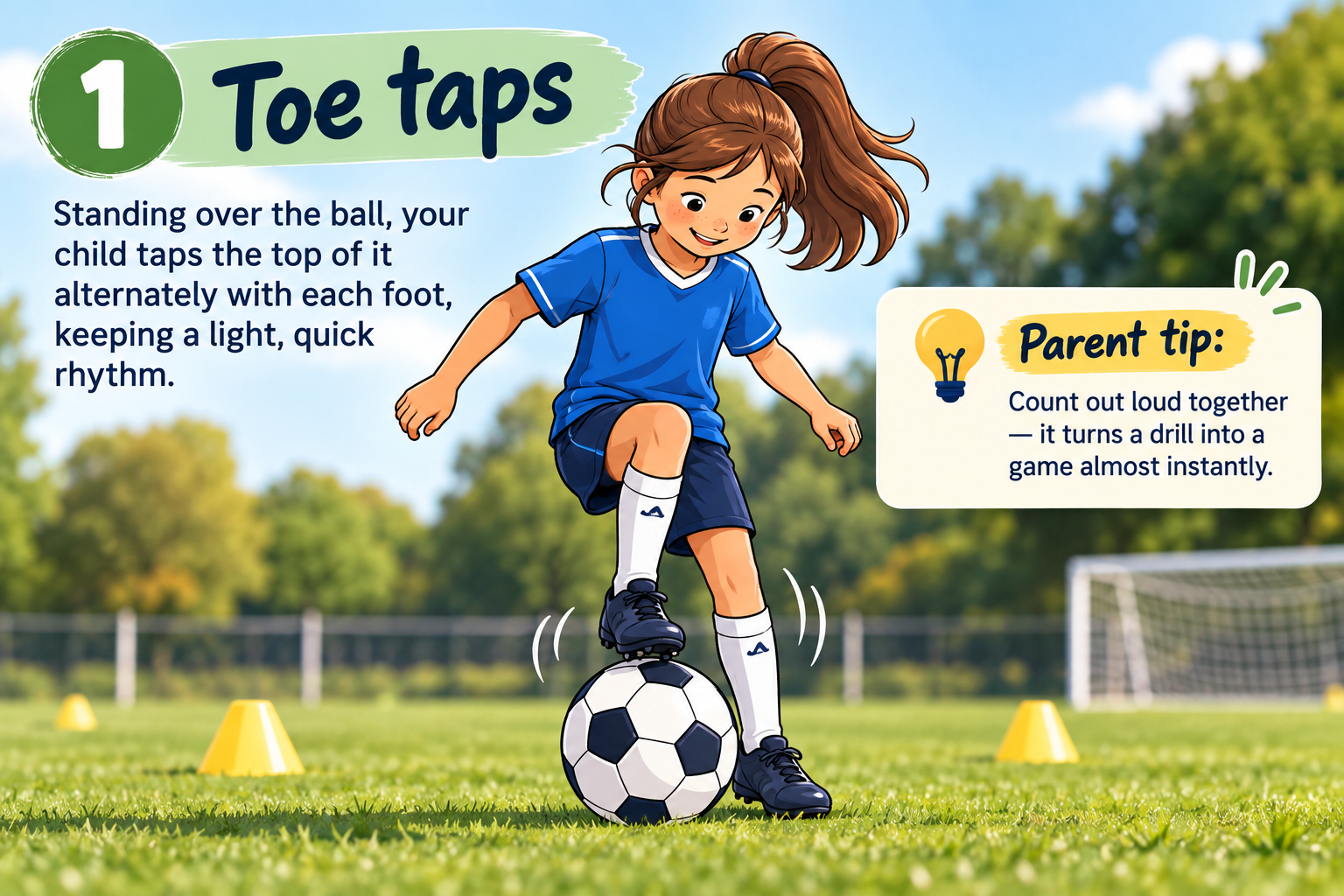
1. Toe taps
Standing over the ball, tapping the top of it side to side with each foot, quick and light. It looks almost too simple to bother with, but it's a genuinely good way to warm up before anything else. Counting out loud together turns it into a game without you having to try very hard.
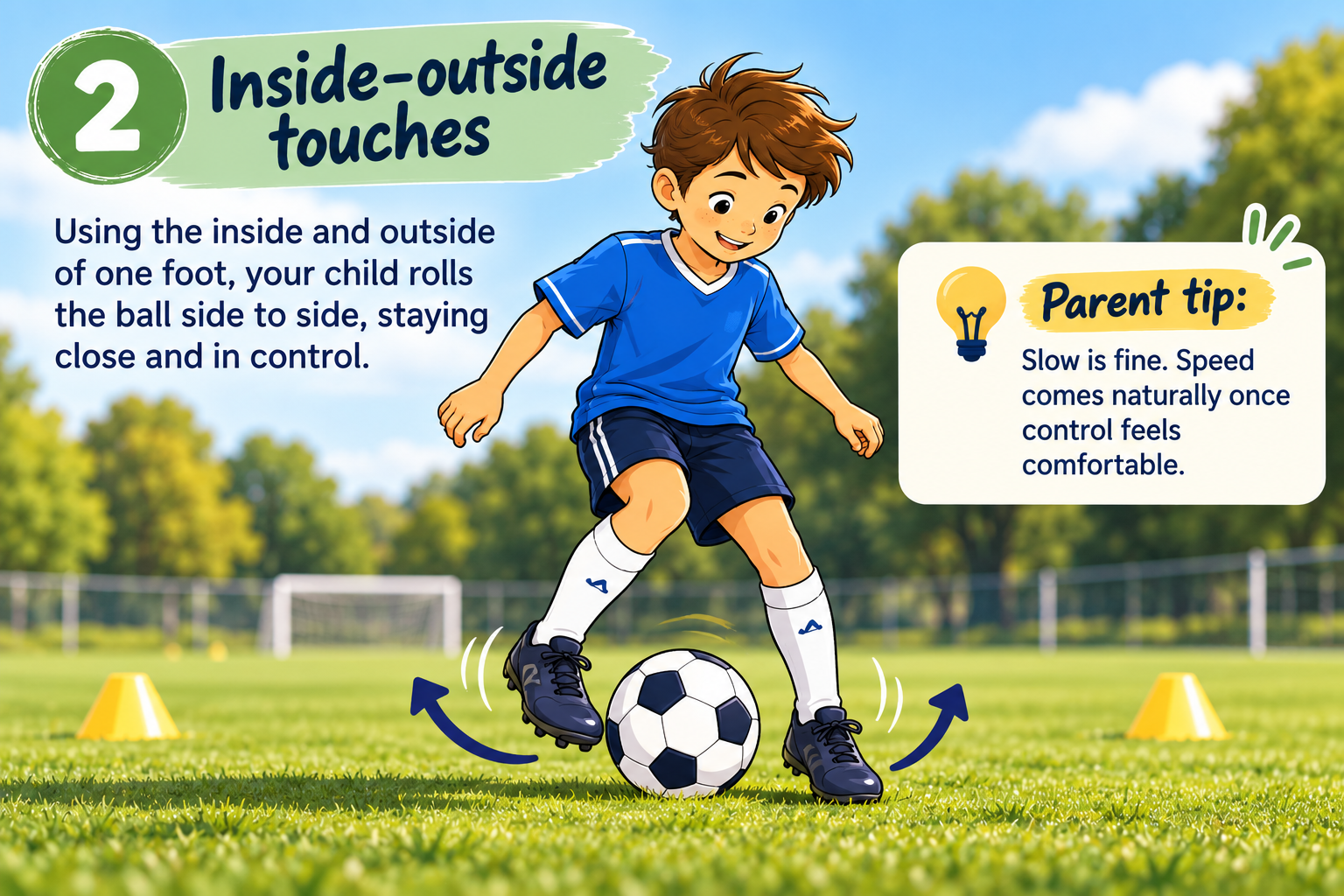
2. Inside-outside touches
Rolling the ball side to side using the inside and outside of one foot, staying close to it rather than knocking it away. Don't worry if it's slow going at first — speed isn't really the point yet, control is, and that comes on its own.
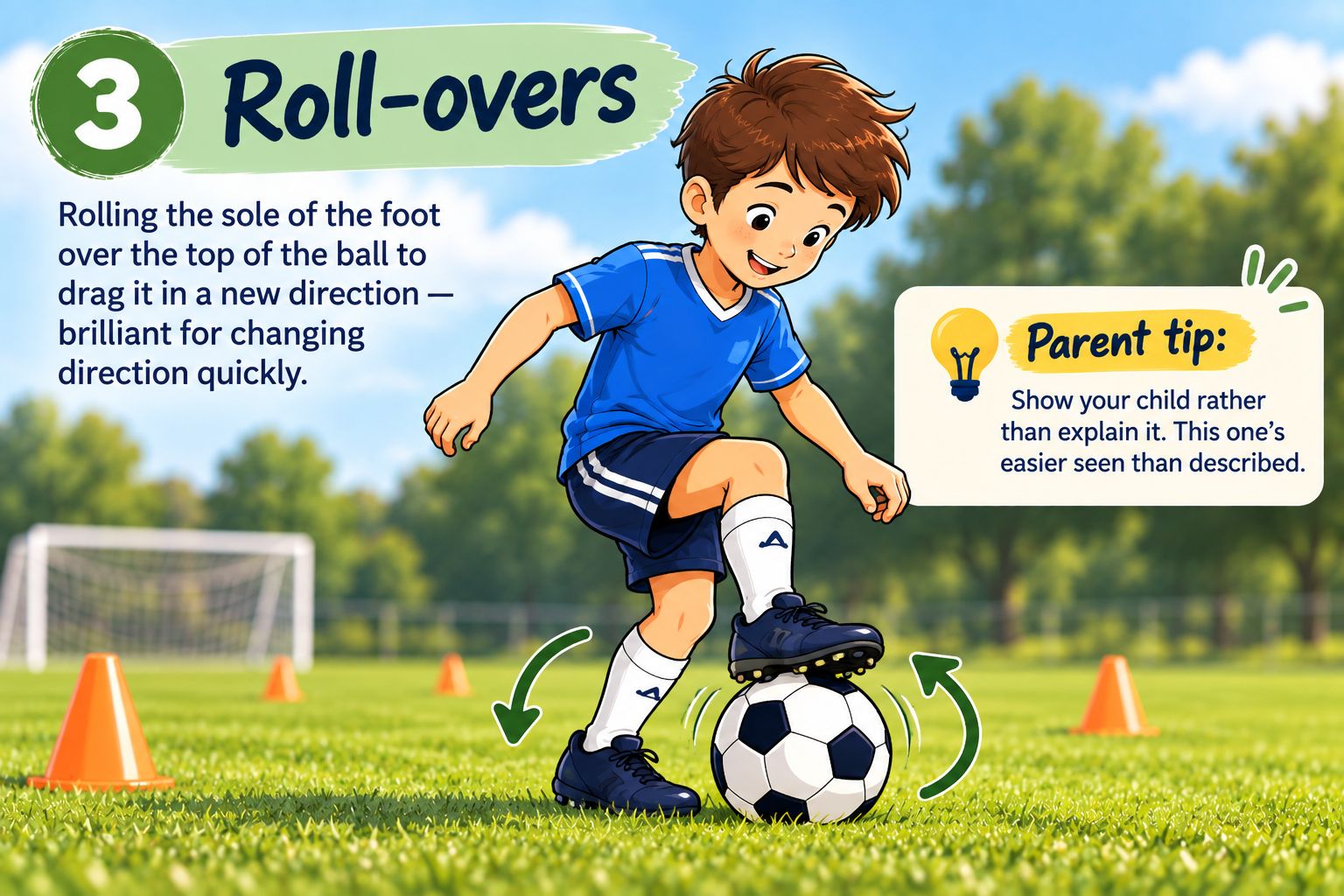
3. Roll-overs
Rolling the sole of the foot over the ball to drag it off in a different direction. Honestly, this one's easier to show than to explain in words, so just do it once yourself first and let them copy you.
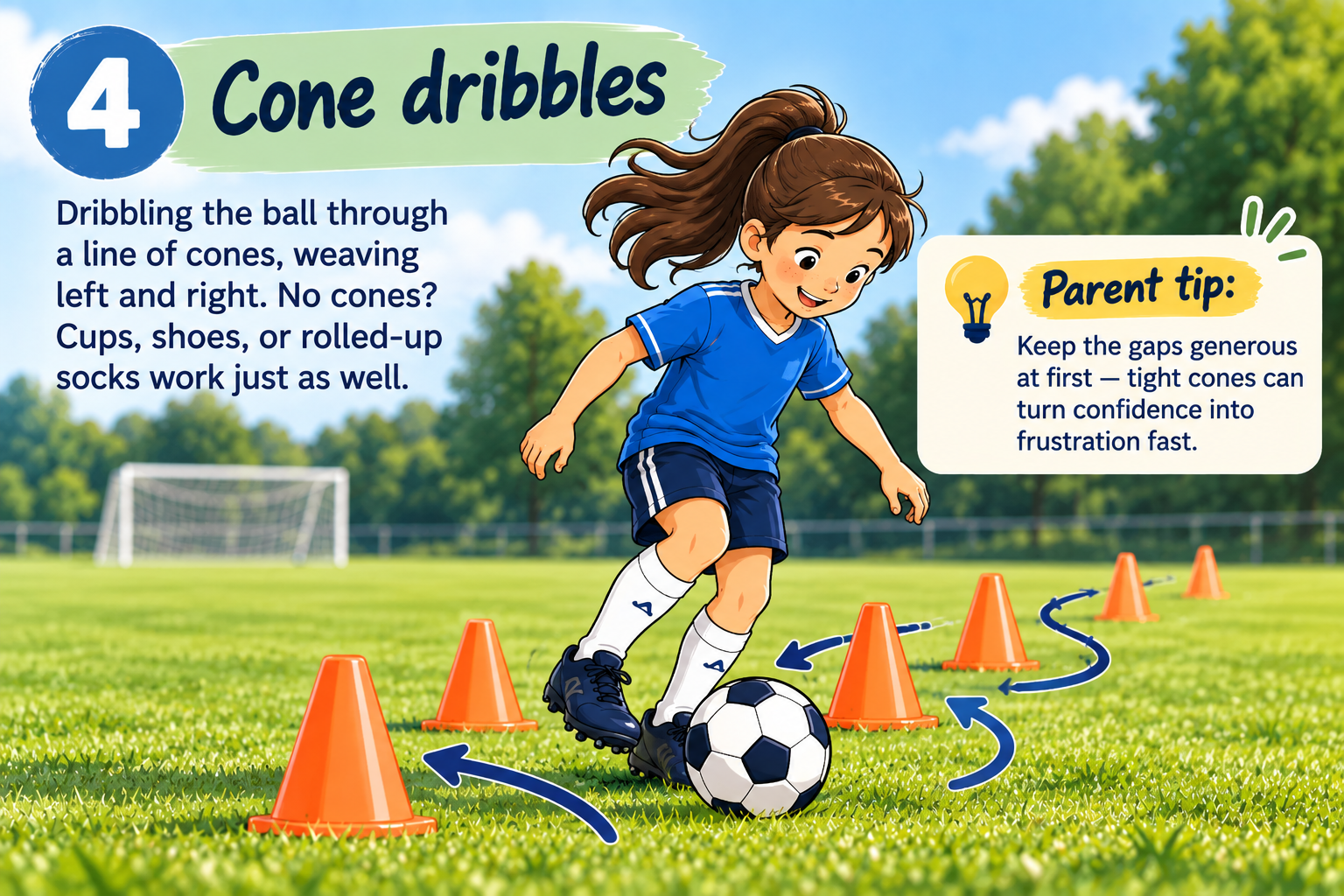
4. Cone dribbles
Dribbling in and out of a line of cones — or, just as well, a line of cups, shoes, or rolled-up socks if that's what's to hand. Leave more space between them than feels necessary at first. Too tight, too soon, and it stops being fun fairly quickly.
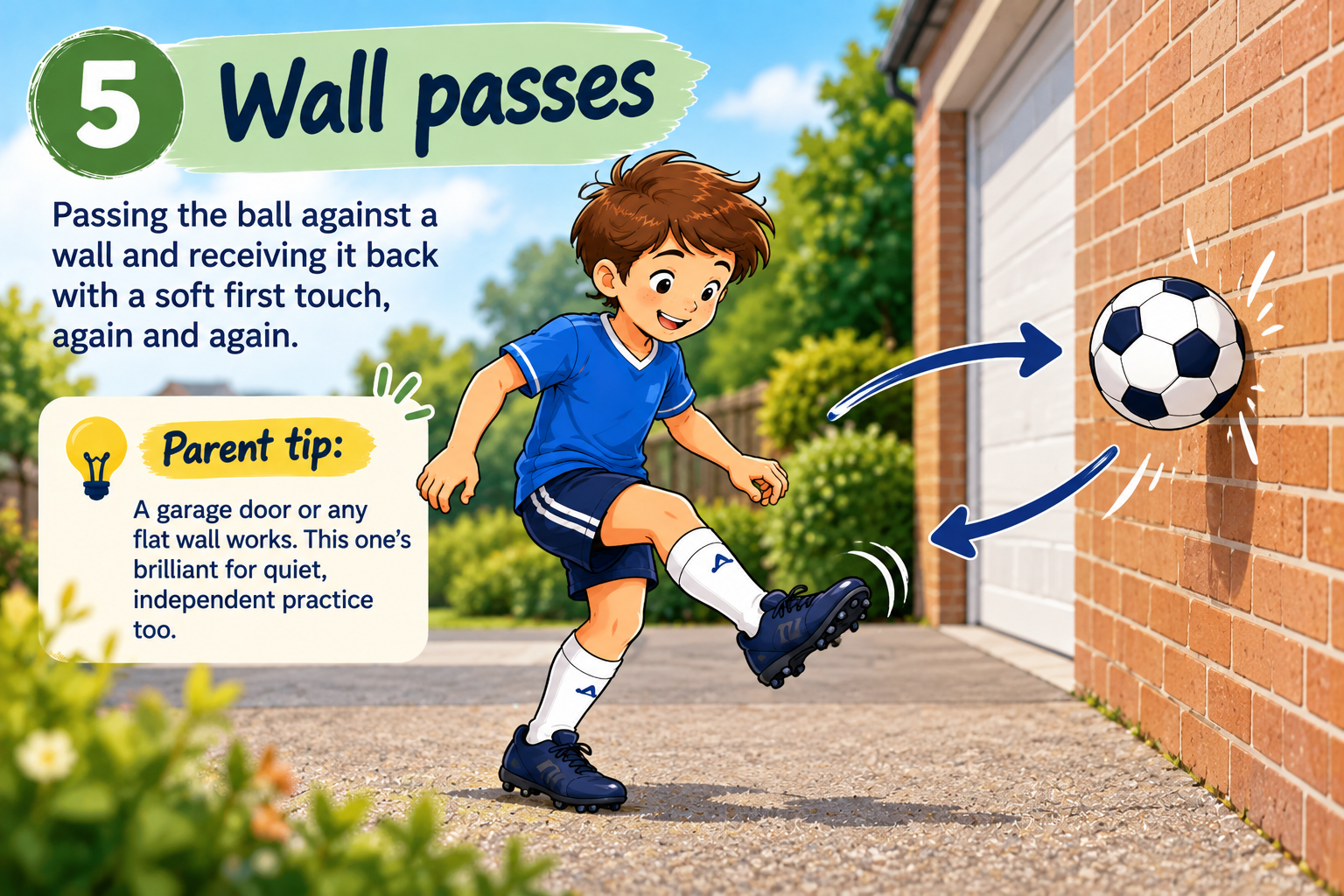
5. Wall passes
Kicking the ball against a wall and controlling it as it comes back, over and over. A garage door does the job perfectly well. It's one of the few on this list your child can happily do alone once they've got the hang of it, which is worth something on a day you've got other things going on.
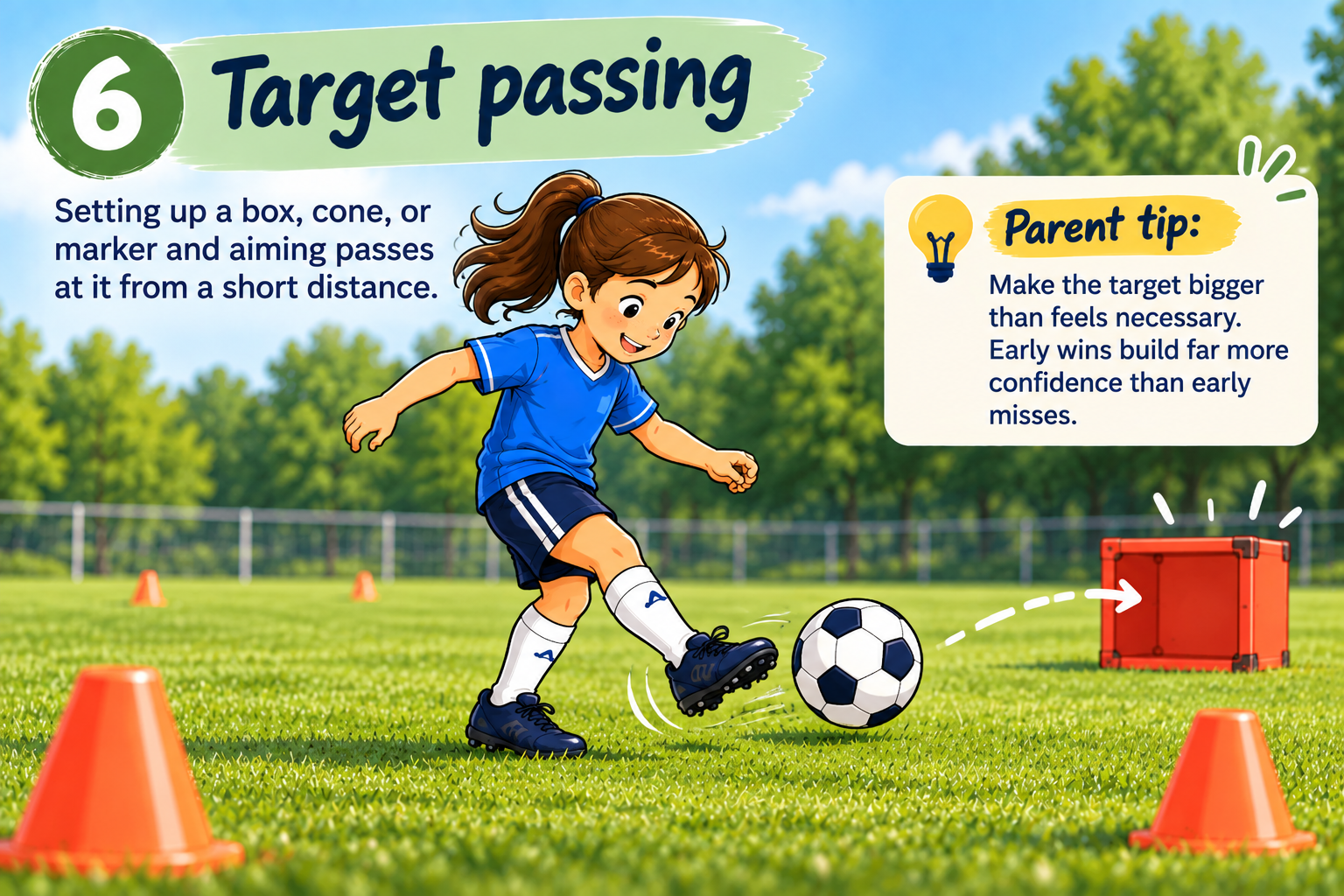
6. Target passing
Set up a box or a cone a short distance away and aim passes at it. Make the target bigger than you think you need to — hitting it a few times early on does far more for a child's confidence than a smaller, more “accurate” target ever would.
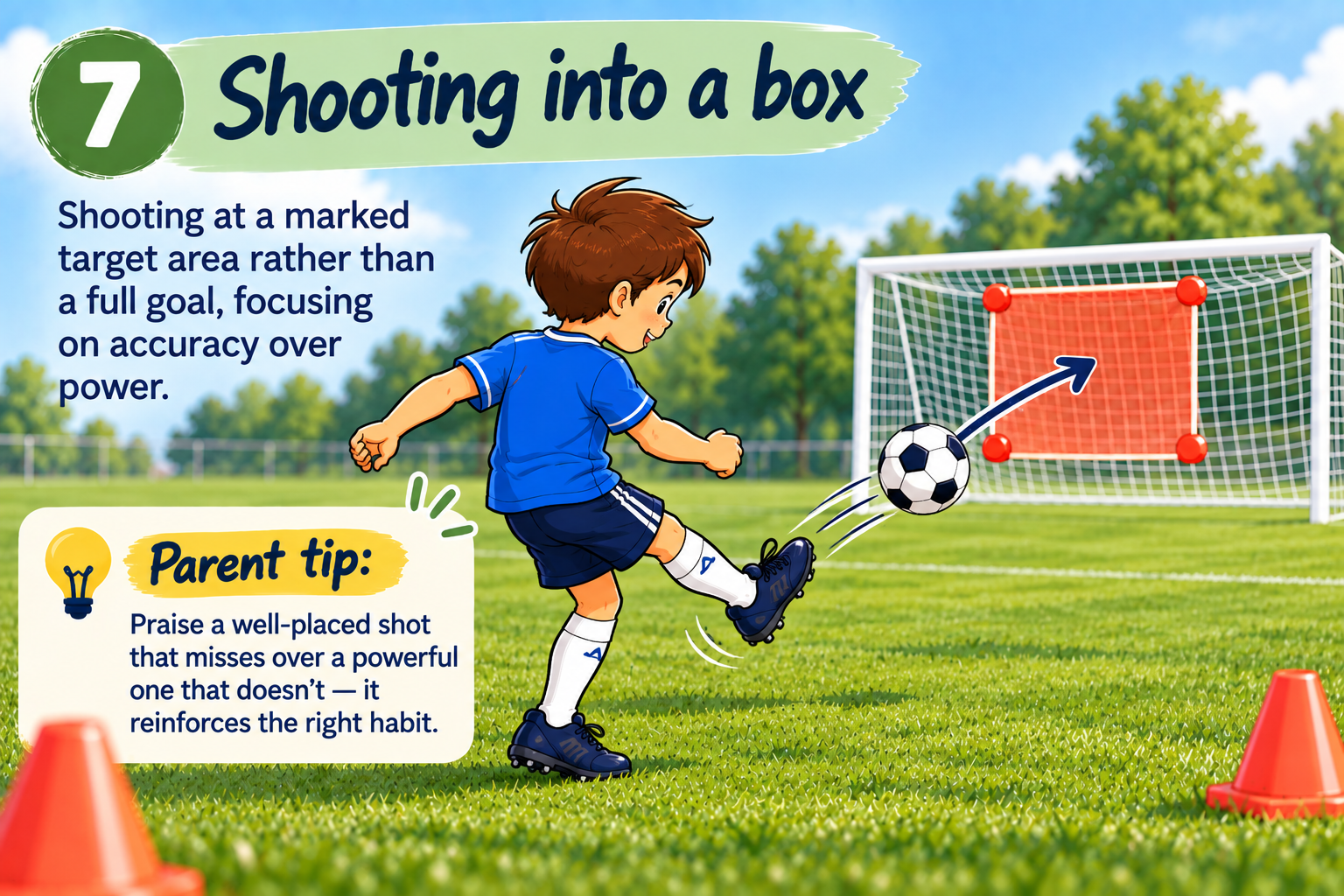
7. Shooting into a box
A marked-out target rather than a full goal, with the focus on placing the ball rather than blasting it. If they hit the target with something gentle, that's worth more praise than a powerful shot that goes nowhere near it — it's a small thing, but it teaches the right habit early.
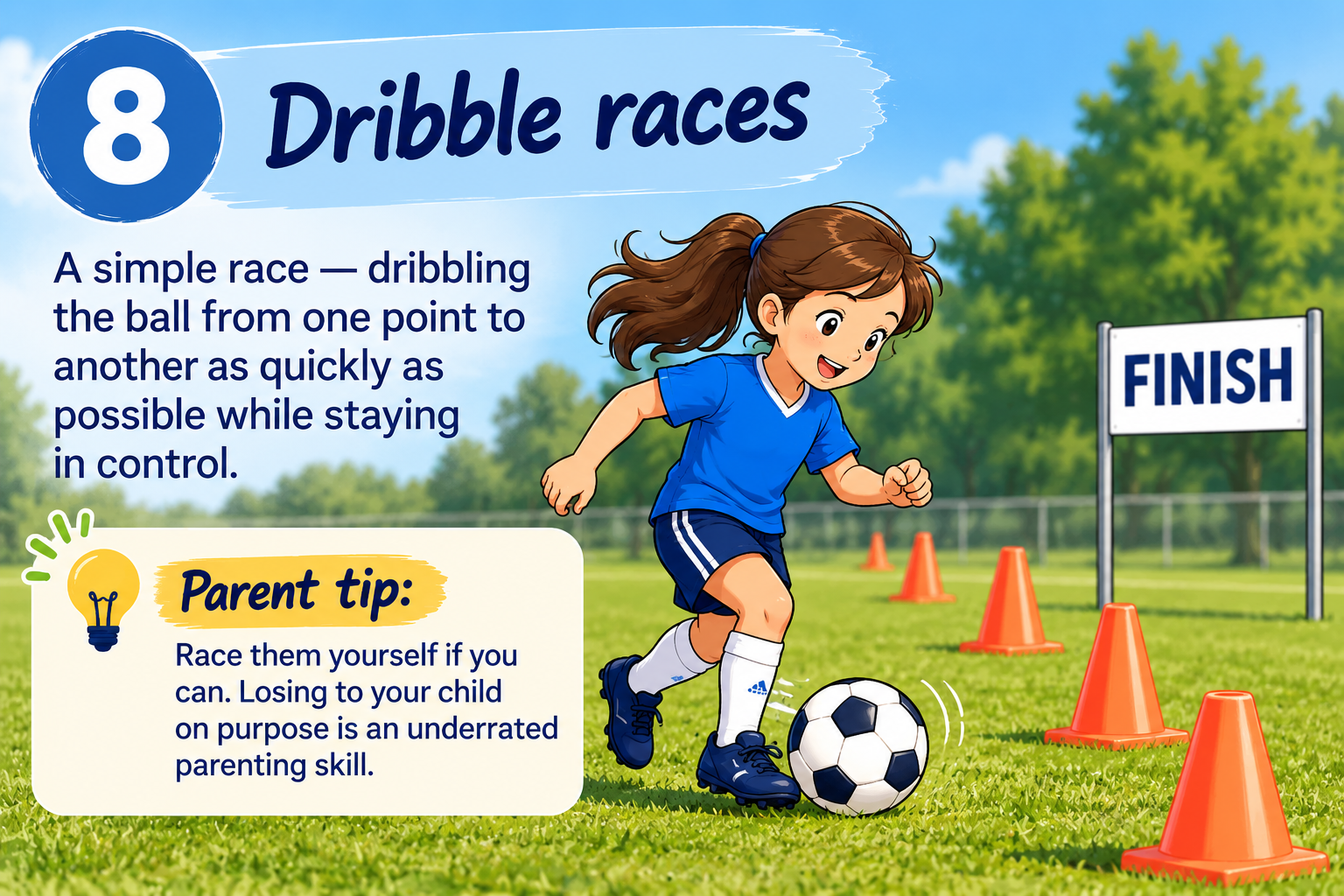
8. Dribble races
A straightforward race from one point to another, ball at their feet the whole way. Join in yourself if your knees allow it. Losing to your seven-year-old on purpose is, in our experience, an underrated part of the job.
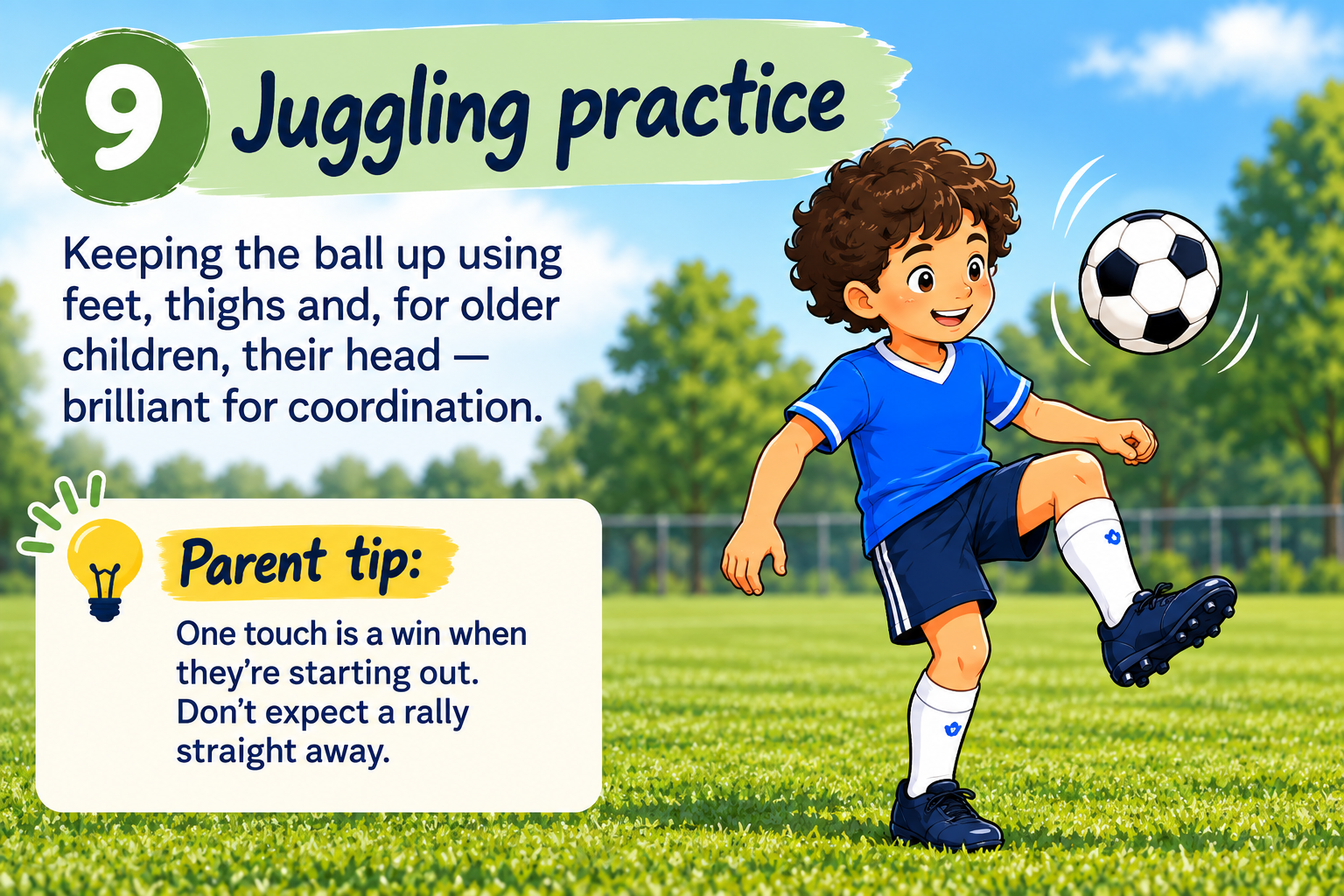
9. Juggling practice
Keeping the ball up with feet, thighs, and eventually a head if they're older — good for coordination, but genuinely hard at first. One clean touch is a real result when they're starting out. Don't expect a rally.
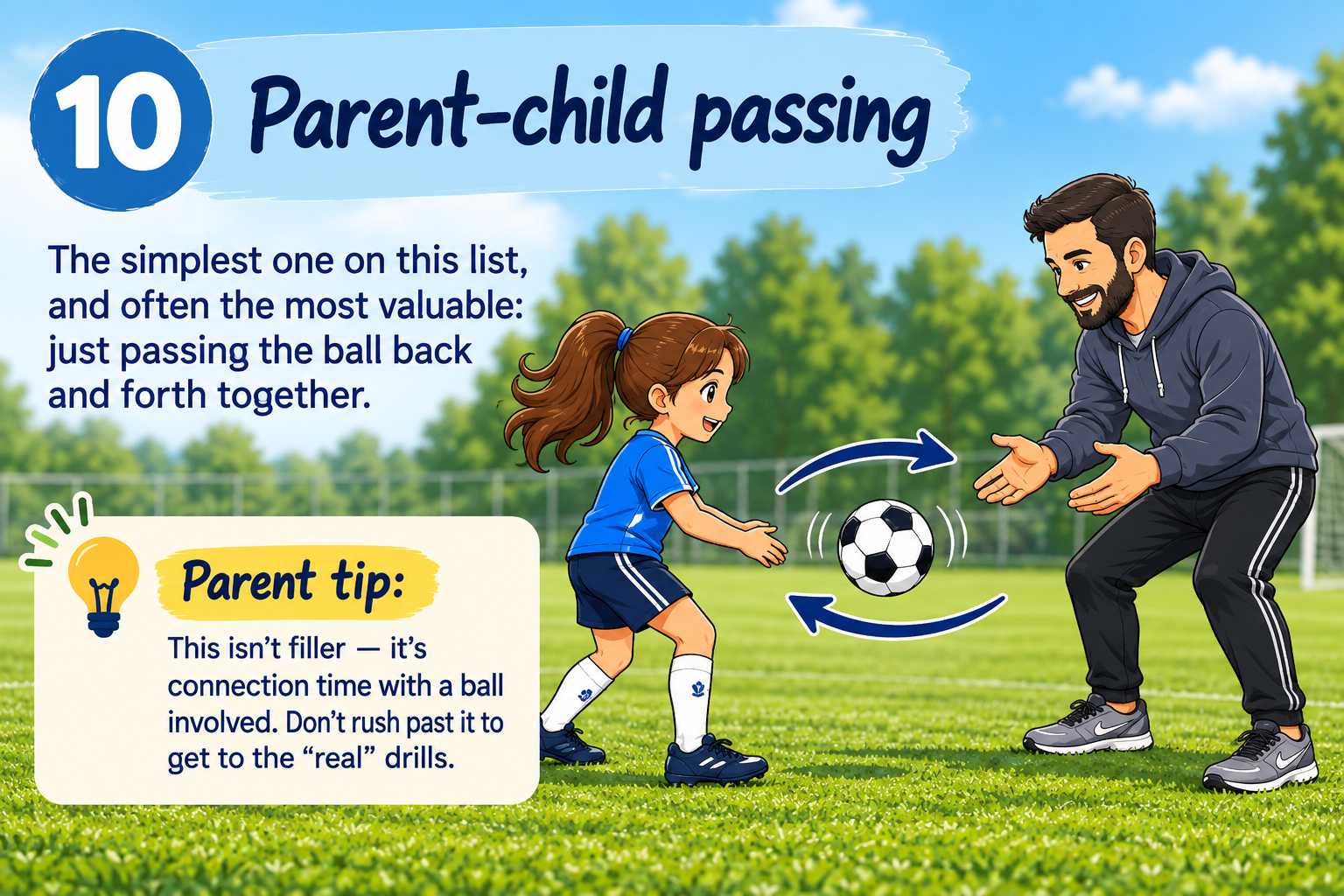
10. Parent-child passing
The plainest one on the list, and probably the one that matters most: just passing the ball back and forth between you. It doesn't look like much, but it's ten minutes of your full attention with a ball involved, and that's rarely wasted on a child, whatever age they are.
A little, fairly often, is plenty
None of this needs a plan. Ten minutes, a couple of times a week, with more encouragement than correction in it, will do more for a child's confidence than a long, serious session once a month ever will.
And if it ends in giggling rather than clean technique, that's not a sign it went wrong. For a young child, that's usually the whole point of it.
You're part of The Football Parent Network — ten minutes at a time, you've got this.
